Water Damage in Fort Worth, TX: What to Do First
Fort Worth's water emergency line is 817-392-4477, Option 1. The city identifies heavy rainfall from localized thunderstorms as its primary cause of flooding.
Who to Call First in Fort WorthWhat to Do in the First Hour After Water Damage
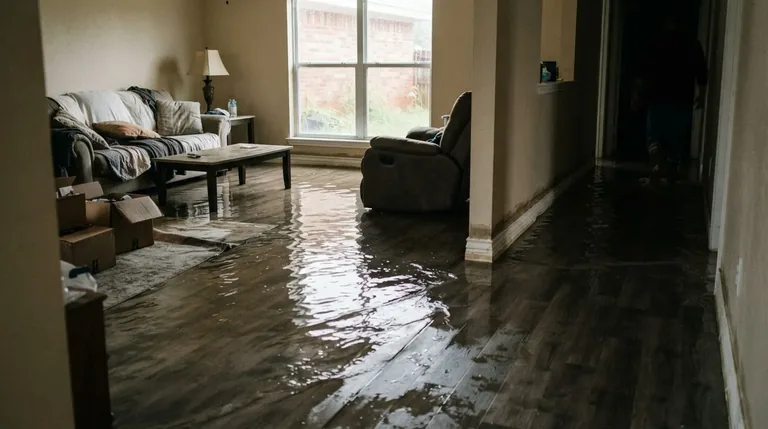
If water is actively getting into your Fort Worth home, protect the people in it first, avoid contact with wet electrical equipment, and use your main shut-off valve if you can reach it safely. Once the immediate danger has passed, photograph the damage, contact your insurer, and reach out to a local water damage restoration provider.
- Use your home's main shut-off valve if you can reach it safely. Do not force a valve you cannot operate; seek qualified help.
- Stay away from standing water near outlets, switches or an electrical panel.
- Photograph rooms, the water line and the apparent source before you move or discard anything, once it's safe to do so.
- Call your insurance company and start keeping a written record of what happened and when.
- Reach out to a local water damage restoration provider to begin drying and assessment.
For the numbers to call for a Fort Worth water or sewer emergency, floodplain questions, and building permits, see who to call first in Fort Worth.
Fort Worth Water and Sewer Emergencies: Who to Call
Fort Worth splits water and sewer problems by type: one number covers active emergencies, a separate office handles floodplain questions, and a third handles permits. Use the table below to find the contact for your situation.
| Situation | Contact | Who it is |
|---|---|---|
| Water main break, no water, or an active sewage overflow | 817-392-4477, Option 1 | the City of Fort Worth's water emergency line |
| Sewage flowing onto the ground | 817-392-4477 | City of Fort Worth |
| Flood risk or Flood Risk Viewer questions | 817-392-6261 or floodplain@fortworthtexas.gov | City of Fort Worth Stormwater Management, floodplain administrator Lisa Biggs, P.E., CFM |
| Building or repair permit | 817-392-2222 | City of Fort Worth Development Services |
Checked: September 2026.
According to the City of Fort Worth, the city is responsible for sewer collectors and outfalls located within rights of way and easements; maintenance of the private line that runs from those mains to your house is the homeowner's responsibility. The City of Fort Worth Water Department publishes the water emergency contact.
When the Problem Might Be on Your Side of the Line
The City of Fort Worth says that if you turn off your household water outlets and an overflow stops, the problem is likely in your private sewer lateral, and you will probably need to call a plumber rather than the city.
Fort Worth's Flood Risk: Storms, the Trinity River and Flood Insurance
Fort Worth's flood-risk letter says heavy rainfall from localized thunderstorms is the primary cause of flooding in the city, and that these events can occur year-round, not only during named storms. The West Fork and Clear Fork of the Trinity River both run through Fort Worth, and the Tarrant Regional Water District maintains a 27-mile floodway to help manage the risk.
Check Your Address's Flood Risk
- Check the City of Fort Worth's Flood Risk Viewer for your specific address.
- Look up your property in OneAddress under its Flood Risks section.
- Contact Stormwater Management at 817-392-6261 or floodplain@fortworthtexas.gov with questions about your parcel.
- Ask about a no-cost site visit if your property is in or near a flood-prone area.
Because Fort Worth participates in the National Flood Insurance Program (NFIP) and the Community Rating System (CRS), the city says residents in the program can get federally backed flood insurance and receive a 15% reduction in flood insurance premiums. In most cases, there is a 30-day waiting period before NFIP coverage takes effect, so the city recommends not waiting for a storm forecast to buy a policy.
The city also offers flood-risk consultations for properties in or near flood-prone areas at no cost, including a site visit on request. Development Services can be reached at 817-392-2222 for permit questions that come up once repair or rebuilding work starts.
Frozen and Burst Pipes in Fort Worth Winters
Fort Worth's average first freeze falls around November 22 and its average last freeze around March 12, based on National Weather Service data for Fort Worth. A pipe that has frozen or burst needs prompt attention to limit water damage to your home.
Even a short cold snap outside that average window can catch an older or poorly insulated home off guard, especially in an attic, garage, crawl space or exterior wall cabinet where pipes are more exposed to outside temperatures. Watching the National Weather Service forecast during a cold front, and knowing where your main shut-off is before you need it, are both worth doing ahead of time rather than during an emergency.
- A faucet that produces only a trickle, or none at all, can be a sign of a frozen pipe nearby.
- If a pipe bursts, stay away from the water if it is near electrical outlets, switches or a panel.
- Contact a plumber or a local water damage restoration provider for a pipe you cannot safely reach or diagnose yourself.
Frozen and burst pipes in Fort Worth, TX covers what a homeowner can safely check and when to call for help.
Slab Leaks on Fort Worth's Clay Soil
North Texas has heavy clay soils, according to Texas A&M AgriLife. A plumbing inspection can help determine whether a suspected leak is beneath the foundation.
- An unexplained rise in your water bill without a matching change in use.
- A warm or damp spot on an otherwise dry floor.
- The sound of running water when every fixture in the house is off.
- Damp carpet, warped flooring or a musty smell near an exterior wall.
Fort Worth publishes a split for sewer lines: the city maintains collectors and outfalls in rights-of-way and easements, and owners maintain their customer service lines. For a water line under your slab, ask Fort Worth Water which side is yours. Insurers typically look at whether the loss was sudden and accidental or the result of gradual, continuous leakage, since the two are usually treated differently in a policy. A plumber can investigate a suspected slab leak before any repair work begins.
A slab leak is not always obvious from the surface, so do not assume a hairline crack in a driveway or wall automatically means a leak underneath, or that a normal-looking floor rules one out. If you suspect a slab leak, contact a plumber for an inspection. Slab leak water damage in Fort Worth, TX walks through this decision in more detail, including who to call at each step.
What Homeowners Insurance Typically Covers in Texas
Most standard homeowners policies in Texas generally cover sudden, accidental water discharge, such as a burst pipe, according to the Texas Department of Insurance, but they typically exclude flood, continuous leakage and mold, except repair tied to a covered loss. Your specific policy wording controls, and this page is general information, not legal or insurance advice.
| Statute | Deadline | What starts the clock |
|---|---|---|
| Ins. Code §542.055(a) | 15th day (30th business day for an eligible surplus lines insurer) | the insurer receives notice of the claim |
| Ins. Code §542.056(a) | 15th business day | the insurer receives all required items, statements and forms |
| Ins. Code §542.056(d) | 45th day | the insurer's notice that it needs more time |
| Ins. Code §542.057(a) | 5th business day | the insurer's notice that it will pay; if payment depends on an action by the claimant, §542.057(b) measures the deadline from that action |
| Ins. Code §542.058(a) | more than 60 days can trigger added liability under §542.060 | the insurer has received all items it reasonably requested |
| Ins. Code §542.059(b) | an extra 15 days | a weather-related catastrophe or major natural disaster, as defined by the commissioner |
There is no single standard mold sublimit in a Texas homeowners policy; endorsements the Texas Department of Insurance has published show limits set at 25%, 50% or 100% of the dwelling coverage, so check your own declarations page rather than assuming a figure. The full text of the statute behind the insurer deadlines above is in Texas Insurance Code Chapter 542.
Public Adjuster Fees
A public adjuster's total commission may not exceed 10% of the insurance settlement, under Texas Insurance Code §4102.104(a). Under §4102.104(b), the adjuster may not charge a percentage fee if the insurer either pays or commits in writing to pay the policy limit within 72 hours after the loss is reported.
Renters
If you rent your home, tell your landlord in writing about any water damage as soon as possible. Texas Property Code §92.052(a) requires a diligent repair effort when its notice, rent-payment and health-or-safety conditions are met, and §92.056(d) treats seven days as a rebuttable presumption of a reasonable time to do it. Your renters insurance may cover your belongings damaged by a covered burst pipe, but it does not cover the building itself.
Mold After Water Damage: Rules and Timing
Mold can start growing in wet materials faster than many homeowners expect, and Texas law treats mold assessment and mold remediation as two separate licensed activities. Knowing both the timing agencies cite and the licensing rules that apply to your home helps you decide what to do next.
- According to FEMA, items that hold moisture can develop mold within 24 to 48 hours.
- The EPA says mold generally will not grow if wet or damp items are dried within 24-48 hours.
- The CDC recommends drying items fully and quickly within 24-48 hours after a flood.
A company you hire needs a TDLR mold remediation license once a project's mold covers 25 contiguous square feet or more, under Texas Occupations Code §1958.102(c). Texas law lets an owner assess or remediate mold on their own residential property with fewer than 10 dwelling units, with no area limit, under §1958.102(e); whether that is wise for a large or contaminated area is a separate question.
The same license holder may not perform both mold assessment and mold remediation on the same project, under §1958.155(a). A remediation contractor must give the owner a certificate of mold remediation not later than the 10th day after the work is completed, under §1958.154(a); the certificate documents that licensed remediation was done. The licensing rule applies regardless of whether the water source was a clean supply line, a burst pipe, or floodwater; contamination risk from the water source is a separate question from whether a license is required. The full chapter is at Texas Occupations Code Chapter 1958. Mold after water damage in Fort Worth, TX covers this in more depth, including what to ask a remediation company before work starts.
What Shapes the Price of Water Cleanup
Restoration cost depends on the type of water, the size of the wet area, the materials involved and how long they stayed wet. Ask the provider for an itemized written estimate for your home's damage.
- Type of water: clean supply water, used "gray" water, or sewage and floodwater.
- How far the water spread: one room, several rooms, or more than one floor.
- What got wet: drywall, insulation, carpet and pad, wood flooring or cabinets.
- How long materials stayed wet before drying started.
- Whether mold was found, which brings in the separate Texas mold licensing rules.
Consumer cost guides publish national and regional ranges for restoration work, but they are surveys of self-reported projects, not official figures, and they are not Fort Worth estimates or quotes for your home. Treat any single dollar figure you see for this job as a starting point for a conversation with a provider, not a quote you can rely on before someone has looked at the affected area.
Water damage restoration cost in Fort Worth, TX explains what typically drives a written estimate up or down, and how a category-1, 2 or 3 water loss changes the scope of work.
If That Did Not Work
If the first number you tried doesn't resolve your problem, or you're not sure who is responsible, Fort Worth has a few other routes depending on what's going on. Choose the contact that matches your unresolved problem.
- Try again: call 817-392-4477, Option 1, for a water main break, active sewage overflow, or other water emergency.
- Try another route: call 817-392-6261 or email floodplain@fortworthtexas.gov for flood-risk questions, or 817-392-2222 for a permit question.
- Contact your insurer's claims department directly, or file a complaint with the Texas Department of Insurance at 800-252-3439 if you believe a deadline under the Texas Insurance Code was missed.
Check the applicable statute carefully: §542.055 uses calendar days for the ordinary acknowledgment deadline, while §542.056(a) uses business days.
Frequently Asked Questions
Who do I call first for a Fort Worth water or sewer emergency?
Can my home flood if it is not in a FEMA flood zone?
Where can I check my property's flood risk before I buy flood insurance?
Which rivers run through Fort Worth?
How can I get alerted about flooding in Fort Worth?
When does freezing weather usually arrive in Fort Worth?
Water in your home right now?
See who to call first in Fort Worth, how to reach your water provider, and how to check your flood zone.
Who to Call First in Fort Worth