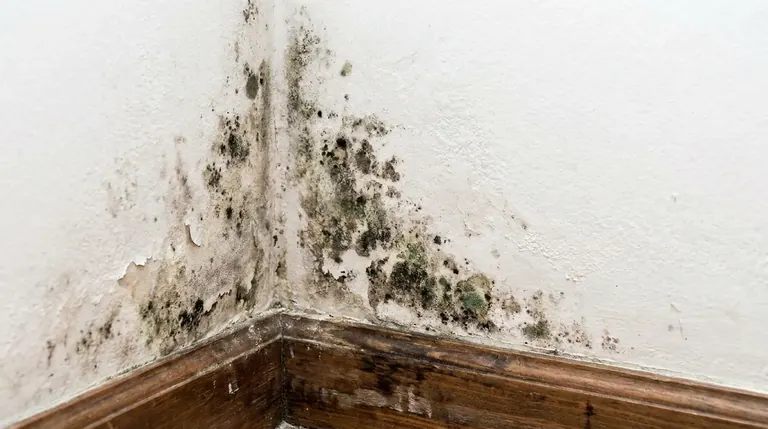
Mold After Water Damage in Fort Worth, TX: The Texas Rules
Texas distinguishes mold assessment from remediation and provides separate exemptions for small remediation projects and owners working on qualifying residential property.
Who to Call First in Fort WorthWhen Mold Licensing Applies in Texas
Mold that follows a water leak in a Fort Worth home is a health and property question first, and a licensing question second. Texas Occupations Code chapter 1958 requires a license to perform mold assessment or mold remediation work, but two separate exceptions can change who needs that license for a specific project.
- Texas law generally requires a chapter 1958 license to perform mold assessment or mold remediation, subject to statutory exemptions.
- Chapter 1958 sets its licensing thresholds by the size of the moldy area and the type of work, and the statute does not list water sources. A mold problem that follows a slab leak is measured the same way as any other.
- Two separate exceptions can apply: one tied to the size of the affected area, and one tied to who owns the property. They are not the same rule, and mixing them up can lead to the wrong conclusion about whether a license holder is required.
| Rule | What it means | Checked |
|---|---|---|
| Hired company, remediation work | License generally required at 25 contiguous sq ft or more of mold (Occ. Code §1958.102(c)) | September 2026 |
| Owner working on own home | No license required on residential property the owner owns with fewer than 10 dwelling units, no area limit (§1958.102(e)) | September 2026 |
| Certificate of mold remediation | Due to the owner not later than the 10th day after remediation is completed (§1958.154(a)) | September 2026 |
| Insurance question or complaint | Texas Department of Insurance | September 2026 |
The 24-to-48-Hour Window Agencies Describe
- FEMA's Ready.gov program: "Wet carpeting, furniture, bedding and any other items holding moisture can develop mold within 24 to 48 hours."
- The EPA: "In most cases, mold will not grow if wet or damp items are dried within 24-48 hours."
- CDC recommends drying fully and quickly within 24–48 hours after a flood.
FEMA says to remove wet materials promptly because wet contents can develop mold within 24 to 48 hours.
For general first steps after any kind of water damage in Fort Worth, see the Fort Worth water damage overview.
The 25-Contiguous-Square-Foot Rule for Remediation
If you hire a company to remove mold from your home, Texas law sets a specific size threshold that decides whether that company needs a state license for the job. This threshold applies to remediation — the cleanup work — not to assessment.
- A company you hire needs a Texas Department of Licensing and Regulation (TDLR) mold remediation license once the project's mold contamination covers 25 contiguous square feet or more.
- Below 25 contiguous square feet, a hired company performing remediation is not required to hold a license under this specific exemption.
- The 25-square-foot figure is exact under the statute — not "about 25" or "near 25."
- This threshold applies to the remediation exemption for hired companies. It does not by itself decide whether mold assessment work needs a license — see the next section for the rule that covers your own home.
This exemption is about a company you hire. Working on your own home yourself is governed by a separate rule, covered next.
When You Can Work on Your Own Home
Texas law treats an owner working on their own home differently from a company working for a fee. This exemption is not about square footage at all. It is about who owns the property and how many dwelling units it has.
- An owner may assess or remediate mold on residential property they own with fewer than 10 dwelling units without a chapter 1958 license.
- This owner exemption has no area limit written into it. It is a separate rule from the 25-contiguous-square-foot remediation exemption for hired companies described above.
- The law lets you work on your own home without a license under this exemption. Whether that is wise for a large or heavily contaminated area is a separate, practical question from whether it is legally required.
These two exemptions answer different questions: one is about the size of the job when you hire someone, the other is about who owns the property when you do the work yourself. Confusing them can lead you to the wrong conclusion about whether a project needs a license holder.
Assessor and Remediator Must Be Different
Texas law keeps the person who decides what needs to be done separate from the person who does the work. A license holder generally may not perform both mold assessment and mold remediation on the same project.
- The same license holder cannot serve as both the assessor and the remediator on one project under chapter 1958.
- This separation applies to the roles on a single project.
- Ask a company which role — assessment or remediation — it is performing for your job, and confirm a different license holder is handling the other role if you need both.
If a company offers to assess your mold and then remediate it on the same project, ask how that fits chapter 1958's separation rule before you sign anything.
The Certificate of Mold Remediation
After a licensed company finishes remediation work, Texas law requires it to give the property owner a specific document. Knowing its correct name and deadline helps you tell a complete job from an incomplete one.
- Texas law calls this document a certificate of mold remediation; ask for it by that name.
- The certificate is due to the property owner not later than the 10th day after the remediation work is completed.
- The certificate documents that licensed remediation work was performed. It is not by itself proof that the underlying water problem has been fixed.
- If you sell the property later, Texas law requires you to provide copies of mold remediation certificates from the preceding five years to the buyer.
Keep the certificate with your other records for the water damage claim. If you are also working through a claim for the water event that caused the mold, see ceiling water damage or frozen and burst pipes for how to document the source.
Does Insurance Cover Mold Damage?
TDI says mold is generally excluded except for repair work tied to a covered loss. Your policy wording controls. The Texas Department of Insurance publishes this guidance.
- TDI says mold is generally excluded from a standard homeowners policy, except for the repair work tied to a loss the policy does cover.
- Some policy endorsements TDI has published set a specific mold sublimit — 25%, 50% or 100% of your Coverage A amount, depending on the endorsement — rather than one number that applies to every policy.
- There is no single sublimit that applies to every Texas homeowners policy. Check your own declarations page and endorsements, or ask your agent.
If you rent your home, tell your landlord about mold or a leak in writing. A renters policy generally covers your belongings, not mold remediation in the building itself.
Mold remediation cost is a separate question from insurance coverage — for how restoration cost is typically evaluated in Fort Worth, see Fort Worth restoration cost.
This page explains general information about Texas mold rules and insurance practice. It is not legal or insurance advice. Ask the provider which license the work requires and request proof of that license, and ask your insurer or agent how your policy applies. For a coverage question or complaint, the Texas Department of Insurance can be reached at 800-252-3439.
If That Did Not Work
If you are not sure whether your situation needs a licensed mold assessor, a licensed remediator, or neither, you have a few ways to get a clear answer before you spend money.
- Ask TDLR directly, or ask the company you are considering to state clearly whether the project meets the 25-contiguous-square-foot threshold and which license the work requires.
- If the mold followed a water loss you already reported to your insurer, ask the adjuster how the policy treats mold repair tied to that loss before you assume it is or is not covered.
- For flood zone information and who to call first for a range of water emergencies in Fort Worth, see who to call first in Fort Worth.
Frequently Asked Questions
Do I need a license to clean up mold in my own Fort Worth home?
What does “25 contiguous square feet” actually mean?
Can the same company assess and remove my mold?
What is a certificate of mold remediation?
Does my homeowners policy cover mold removal?
I am selling my house. Do I need to show mold paperwork to the buyer?
Where do I file a complaint about mold work or an insurance denial?
Does it matter how the water got there — burst pipe, roof leak, or sewage?
Water in your home right now?
See who to call first in Fort Worth, how to reach your water provider, and how to check your flood zone.
Who to Call First in Fort Worth